
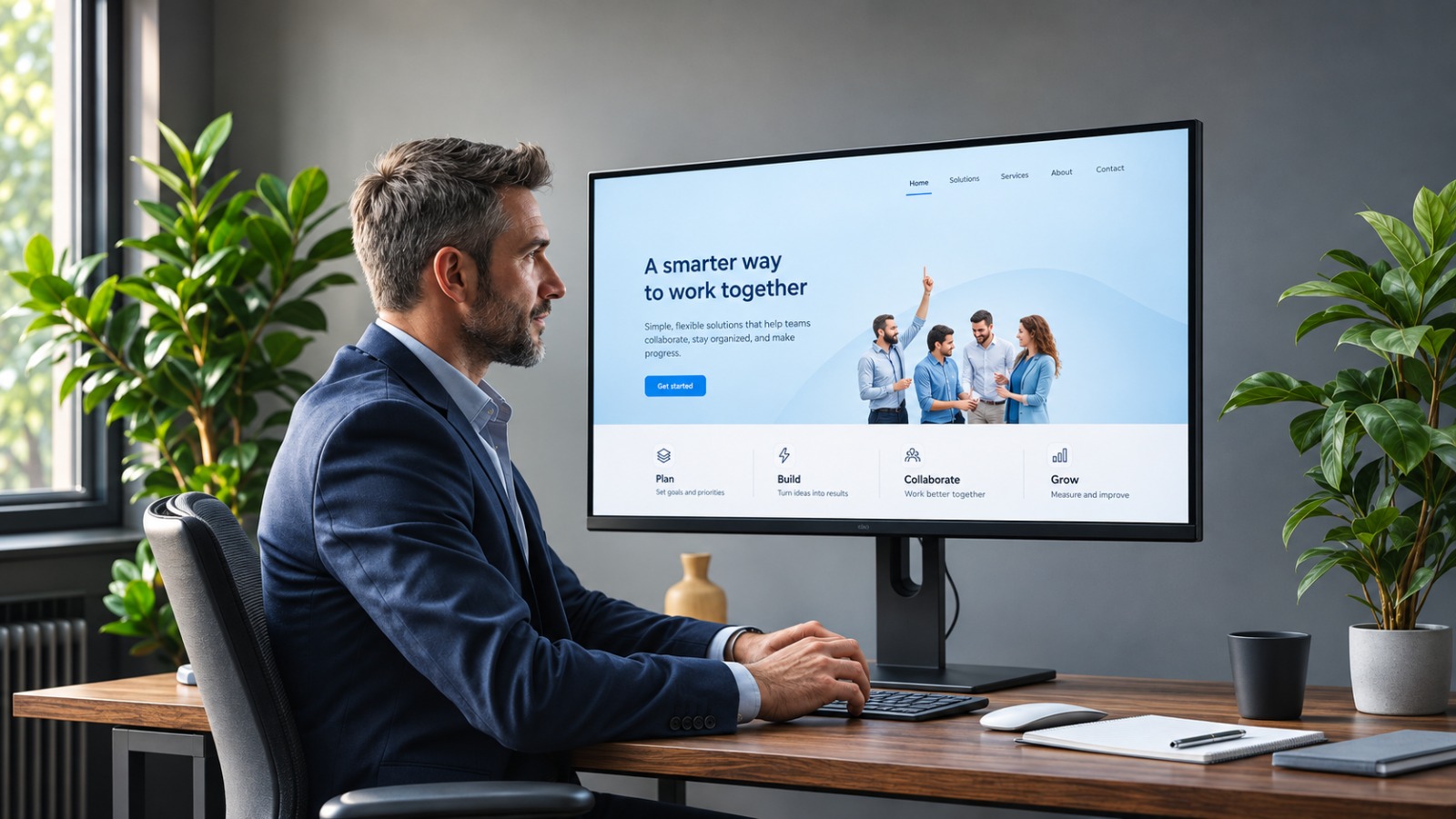
Think about the last time you wanted to hire a service provider, visit a new restaurant, or purchase something from a company you had never heard of. Chances are, you searched for the business online before making a decision. You may have checked its services, looked for reviews, or simply wanted to know whether the company was genuine.
Your customers follow a similar process. In 2026, a professional website is not just about being present on the internet. It gives potential customers a reason to understand your business, trust what you offer, and get in touch.
Whether you run a local company, a growing startup, or an established organization, your website can play an important role in how people discover and evaluate your services. But having a website and having one that genuinely supports business growth are two different things.
Your Website Is Often the First Real Introduction to Your Business
Imagine two companies offering exactly the same service. One has clear service descriptions, professional photographs, authentic testimonials, and easy contact options. The other has an outdated website that loads slowly, looks poor on a phone, and offers little information.
Most customers would feel more comfortable speaking to the first company. A well-planned website communicates organization, transparency, and attention to detail. It cannot guarantee a sale, but a confusing or unreliable experience can discourage a potential customer before a conversation even begins.
Social Media Is Valuable, but It Should Not Be Your Only Online Presence
Many businesses begin with Instagram, Facebook, and WhatsApp Business. These platforms are useful for sharing updates and building relationships, but they are controlled by third parties. Algorithm changes and account restrictions can affect how easily people see your content.
A website gives you more control over what customers learn about you. For example, a furniture seller can use Instagram for new collection photos and direct visitors to its website for measurements, materials, and delivery details. A consultant can share insights on LinkedIn and use the website for service explanations and consultation enquiries.
Rather than choosing social media or a website, many businesses benefit from making their website the central destination and using social platforms to bring interested people there.
A Professional Website Can Help People Find You Through Google
Consider an interior design business in Chandigarh. Customers might search for interior designers in Chandigarh, home renovation services near me, or office interior design. A well-structured website with useful services pages and relevant local information gives that business an opportunity to appear for related searches.
Search engine optimization, or SEO, involves improving content, site structure, technical health, and usefulness so search engines can better understand pages. Publishing a website does not automatically secure rankings. SEO requires a sound foundation, realistic keyword targeting, and ongoing improvement.
Your Website Can Collect Enquiries After Business Hours
A physical office has fixed opening hours; a website can provide information whenever a customer needs it. Someone researching a project late at night can read your services, review frequently asked questions, and submit an enquiry.
Useful features may include a reliable contact form, click-to-call buttons, WhatsApp enquiries, quote requests, appointment scheduling, and product or service catalogues. But adding buttons everywhere is not the answer. A good website places the right action near the information that helps a visitor make a decision.
Mobile-Friendly Design Is Essential
A website may look polished on a large monitor and still be difficult to use on a phone. Small text, oversized images, overlapping elements, and complicated menus frustrate visitors. Responsive design adapts layouts to different screen sizes and helps people read, navigate, and contact the business comfortably.
Picture someone searching for an urgent repair service from a phone. They want to find the phone number immediately, not zoom around an oversized desktop layout. Mobile usability should be part of development from the start.
Speed, Reliability, and Security Deserve Attention
Design creates a first impression, but performance affects the full visit. Huge images, excessive scripts, slow hosting, and unnecessary plugins can make a website feel unresponsive. Regular performance reviews help identify what needs improvement.
A reliable business website should also use HTTPS, updated software, sensible administrator permissions, and appropriate backups. Shops and customer portals may need additional controls because they handle orders, accounts, and business data. Maintenance is part of operating a website, not an optional afterthought.
Build Around Business Needs, Not a List of Trendy Features
Not every business needs an expensive custom application. A local service provider may need only clear service pages and a dependable enquiry form. An online store may need checkout, inventory handling, and order tracking. An educational institution might need registrations, document uploads, and a student dashboard. Before commissioning development, ask: What do visitors need to accomplish? What actions should the site encourage? What information or processes need to be managed by the business? Clear answers help avoid paying for features with little real value.
How Much Should a Business Invest in Its Website?
There is no single website price that fits every company. Design requirements, page count, integrations, content preparation, testing, hosting, and maintenance all affect cost. A simple information site demands a different level of work than a custom marketplace.
Look beyond the lowest quote. Check what is included, whether the website can grow with the business, and who owns the domain, hosting account, files, and data. These practical details matter if you later need to change suppliers or expand.
Signs Your Existing Website May Need Attention
A full rebuild is not always necessary. Improving content, forms, navigation, speed, or technical setup can sometimes be more valuable than starting from scratch. Review the website if visitors struggle to find information, mobile pages are awkward, enquiries fail to arrive, services are outdated, or traffic rarely converts into relevant enquiries.
A useful audit should identify the actual bottleneck before recommending a redesign. Business goals should guide the solution.
Frequently Asked Questions
Is a website necessary for a small business?
A website is not legally required for most small businesses, but it can provide a trustworthy home for service details, contact information, and enquiries. A small, well-maintained website can be more useful than a large neglected one.
Can a business website help generate leads?
Yes. A website can support lead generation when relevant visitors find useful information and have clear ways to contact the business. Results depend on traffic quality, credibility, relevance, and usability.
Is WordPress suitable for a professional website?
WordPress can work well for many business websites thanks to flexible content management. More complex requirements may justify custom development or a different platform.
How long does website development take?
Timelines depend on design complexity, content readiness, integrations, reviews, and testing. A straightforward service website is generally quicker to build than a custom web application.
Will my website automatically appear on Google?
A public website can be discovered and indexed by search engines, but indexing and ranking are not guaranteed. Good technical setup and relevant content create better opportunities for visibility.
Final Thoughts
A professional website is more than a digital brochure. It helps customers understand your services, assess your credibility, and contact you when they are ready. The strongest websites are easy to use, technically reliable, and connected to business objectives.
At Aneek Tech, we build business websites, eCommerce platforms, mobile applications, and custom digital solutions around individual requirements. If you are planning a new website or improving an existing one, start by understanding what your customers and business actually need.